Podcasting
I have produced podcasts independently, collaborated with small teams, and managed dozens of students concurrently as they created scripted and unscripted episodes. Several of my podcast features have been picked up through PRX Exchange.
I have experience as a host and producer and am available to help with a range of long- and short-term podcast projects. Email epowers@towson.edu with inquiries.
Portfolio
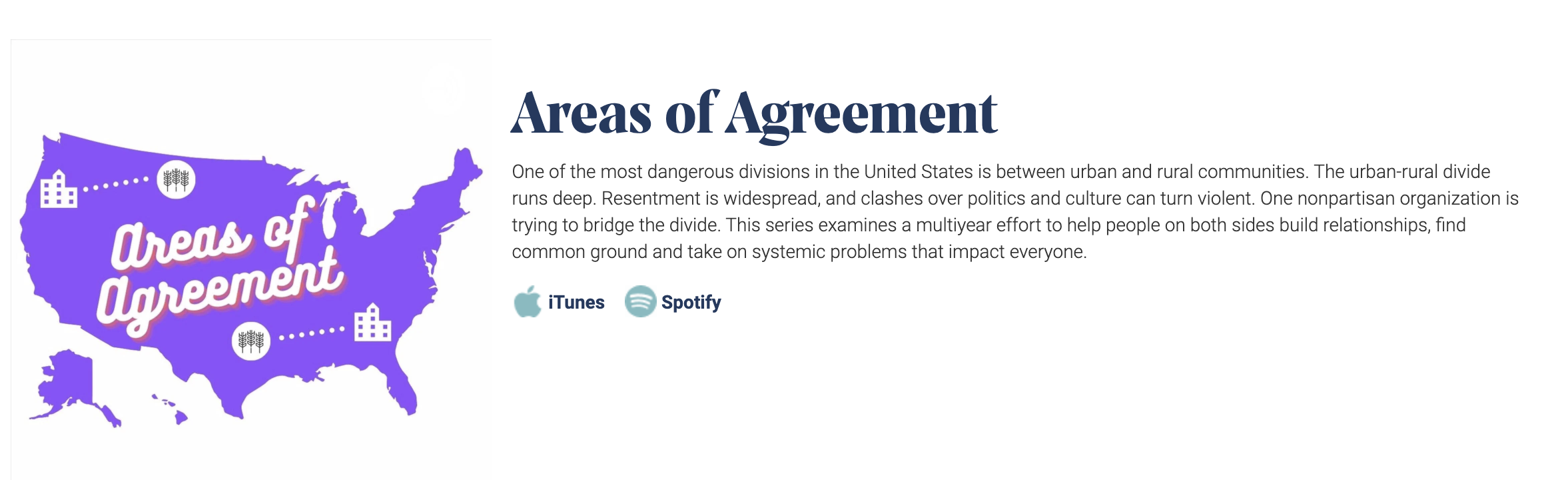
From 2020-2022, I hosted and produced a podcast called Areas of Agreement that examines the urban-rural divide in the United States. Working with the nonprofit organization Urban-Rural Action as a partner, I participated in a program that brought together people from urban and rural communities across the U.S. I helped organize an online forum on declining civic engagement in news deserts, and I produced a podcast episode about this topic that focused on a community that had recently lost its only newspaper. I also worked with the Solutions Journalism Network on an episode that explores proven approaches to having constructive conversations on divisive issues.
The series is available anywhere you get your podcasts, including Spotify, Apple Podcasts, Google Podcasts, PRX Exchange, America’s Talking Network, and Urban-Rural Action.
Experts describe the urban-rural divide as one of the biggest fault lines in the United States. This first episode explores some fundamental questions: What causes the division? Why is it getting more pronounced? Why do we resent people who don’t live in the kind of places we do? What can be done to bridge the divide?
Food might be the ideal topic for people living in cities and rural areas to unite around. Lack of access to food affects all communities. This second episode examines efforts to reduce food waste and food insecurity.
Dialogue alone won’t solve complex societal problems. But complex societal problems are hard to address without constructive conversations across difference. This third episode examines proven approaches to having conversations on divisive issues. One common theme: Seek to understand, don’t just seek to be understood.
Education funding disparities affect K-12 schools in both urban and rural communities. One report found that Pennsylvania schools are the nation’s most inequitable. This fourth episode focuses on a group of state residents who sent to lawmakers a letter advocating for changes in the way they allocate money to schools.
Hundreds of urban and rural counties in the U.S. don’t have access to credible and comprehensive information that helps residents make decisions about quality of life issues. These places are commonly known as news deserts. This episode explains the rise of news deserts and explores the consequences with a case study of Caroline County, Virginia. How has losing a local newspaper affected the community? How do people get access to news and information about COVID-19?
Community colleges — especially in rural areas — often get little attention. But they are immensely important to their regional economies. In this episode, the Uniting for Action America economy team helps the nonprofit Education Design Lab on a multi-year initiative to create new pathways to postsecondary attainment and economic opportunity in rural communities.
In this episode, an interview with an author who is part of a cottage industry of books about the political and cultural forces shaping rural America. I asked him why he decided to write about Nebraska, who his audience is and why there seems to be so much fascination among people who live urban areas about the small rural town where he grew up. In part two of this episode, an interview with a rural resident who’s heavily involved in Urban-Rural Action about the recent attention paid to rural America and why it can be difficult to engage people from these communities in initiatives that aim to bridge the divide between urban and rural.
One year after Jan. 6, 2021, Urban-Rural Action and partner organization Lead for America took part in the first National Day of Dialogue. In this episode, representatives from both organizations discuss how they felt on the anniversary of the insurrection, how they define political violence, what they make of a recent poll showing that roughly one-third of Americans say violence against government can be justified, and what questions they would ask people who share that view.
Urban-Rural Action, with support from Heterodox Academy, has done a series of workshops with college students on how to have dialogues across difference. The need for this training is clear. Students often go through school without having constructive conversations with people they disagree with, and research shows that they are often hesitant to express their views on divisive topics. In this episode, two students share what they learned from a recent workshop, what it’s like trying to encourage thoughtful deliberation on their campus, and why that can be a challenge. A professor who has dedicated his career to promoting a culture of debate and deliberation describes how he goes about doing that inside and outside the classroom. We discuss the need for viewpoint diversity and constructive disagreement, and examine the state of public discourse on college and university campuses.
People from across the political spectrum, young and old, urban and rural often find common ground on the importance of supporting small business owners. This episode follows a group put together by Urban-Rural Action that aims to support immigrant entrepreneurship on the Eastern Shore of Maryland. Small business owners from Easton, Maryland, share the joys and challenges of running a company. Staff members from the Chesapeake Multicultural Resource Center discuss what they learned from these interviews and how the center can address business owners’ challenges.
Polarization is typically thought of as being bad. We’re so polarized, the narrative goes, that we can’t find common ground. But what exactly is polarization? Is it always bad? Is there such a thing as good polarization? In their book, The Philosophy of Group Polarization, Dr. Fernando Broncano-Berrocal & Dr. J. Adam Carter argue that group polarization is a neutral phenomenon, and they present ways that groups can polarize in epistemically good ways. Alex Sussman sits down with the co-authors to discuss their findings and recommendations. Elia Powers speaks with Urban-Rural Action’s Joe Bubman about his thoughts on polarization and how groups taking part in UR Action programs can deliberate effectively and take action.
Conversations around diversity often focus on race, gender, politics, socioeconomic status, geography, even education level. What about generational diversity? We are an age-diverse society, with almost equal numbers of people alive from every stage of life. But often, generations are siloed, leading to division and misunderstanding. This episode features conversations with leaders in the movement to bring older and younger generations together to bridge divides. First, Eunice Lin Nichols, co-CEO of CoGenerate, and Dr. Cal Halvorsen, a senior research fellow at CoGenerate and an assistant professor at Boston College, discuss a recent study on what Americans think about cogeneration, and how to make intergenerational initiatives successful. Then, Joe Bubman of Urban-Rural Action and Deborah Tien of Common Agency/UR Action speak about being Gen2Gen Innovation Fellows, and Tien discusses how her organization is seeking to build a new type of neighborhood network online and in person.

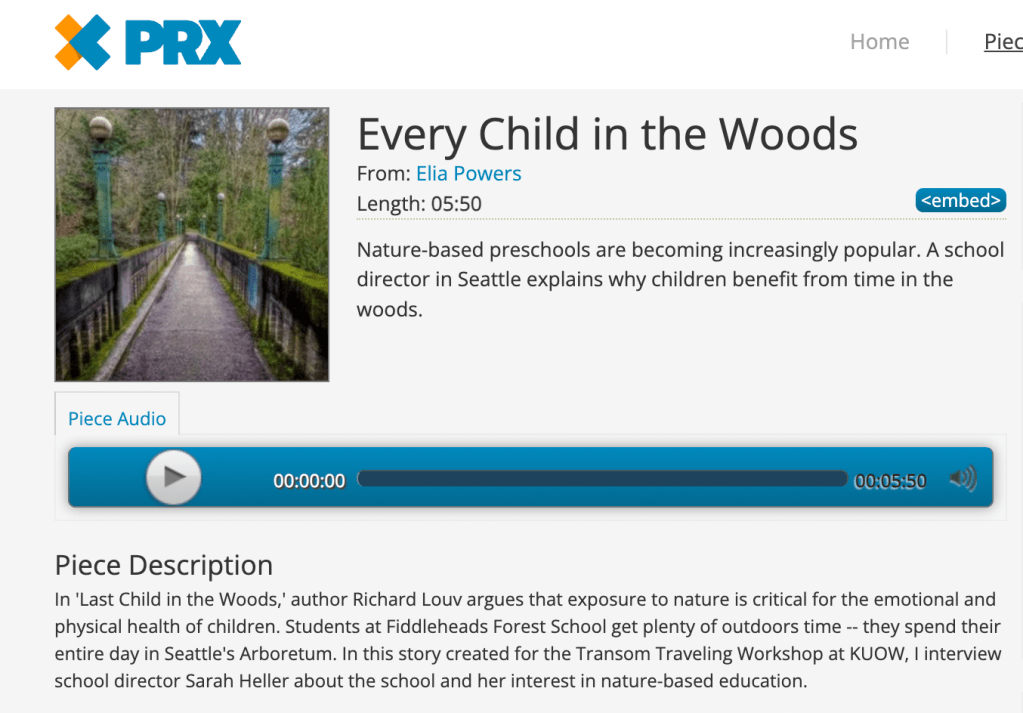
Listen to a podcast I produced for PRX Exchange and the Transom Traveling Workshop in Seattle about a nature-based preschool, and two podcasts about COVID-19: how artists continue to collaborate online and how positive psychology can help us during the pandemic.
Watch motion graphic videos I produced that highlight students’ work in my podcasting course at Towson University.
The age of generative artificial intelligence is upon us. Students in Towson University’s podcasting course teamed up to report on how AI is disrupting industries and institutions, making it difficult to detect what’s real and fake, and creating new opportunities to create, communicate and find companionship.
Life in your 20s is full of fun questions: Where should I go out tonight? Who should I ask out? How should I respond to this TikTok? And, for the lucky few, how can I profit off my name, image and likeness? But life at that age is also full of tough questions: How can I afford rent after college? How can I get a job when everything seems so competitive? Should I have kids? How do I know if I have brain rot? Or whether I have a gambling addiction? Students in Towson University’s podcasting course teamed up to tackle these questions and more.
Listen to a seven-part oral history podcast series on living through the first six months of the COVID-19 pandemic. I served as executive producer and host of episode 1.
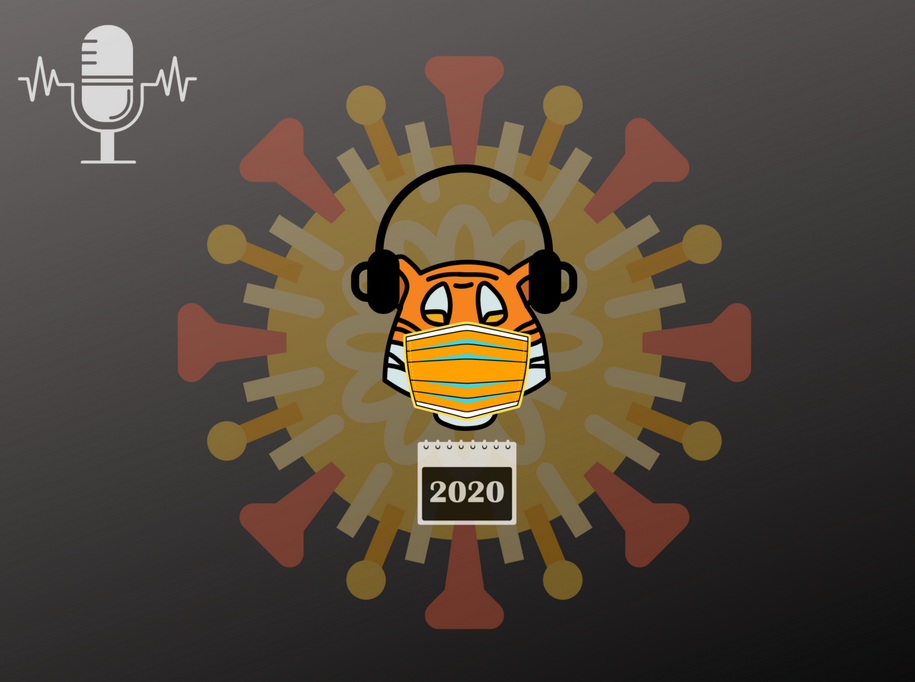
Living through COVID-19 is a blur. We remember some moments vividly. But it’s easy to forget the chronology of events and how we felt along the way. To make sure our collective memory doesn’t vanish, students in a narrative podcasting course at Towson University conducted an oral history of what it was like to be a student, parent, faculty member, staff member, administrator or coach at Towson during the 2020 COVID-19 pandemic.
 Elia Powers